
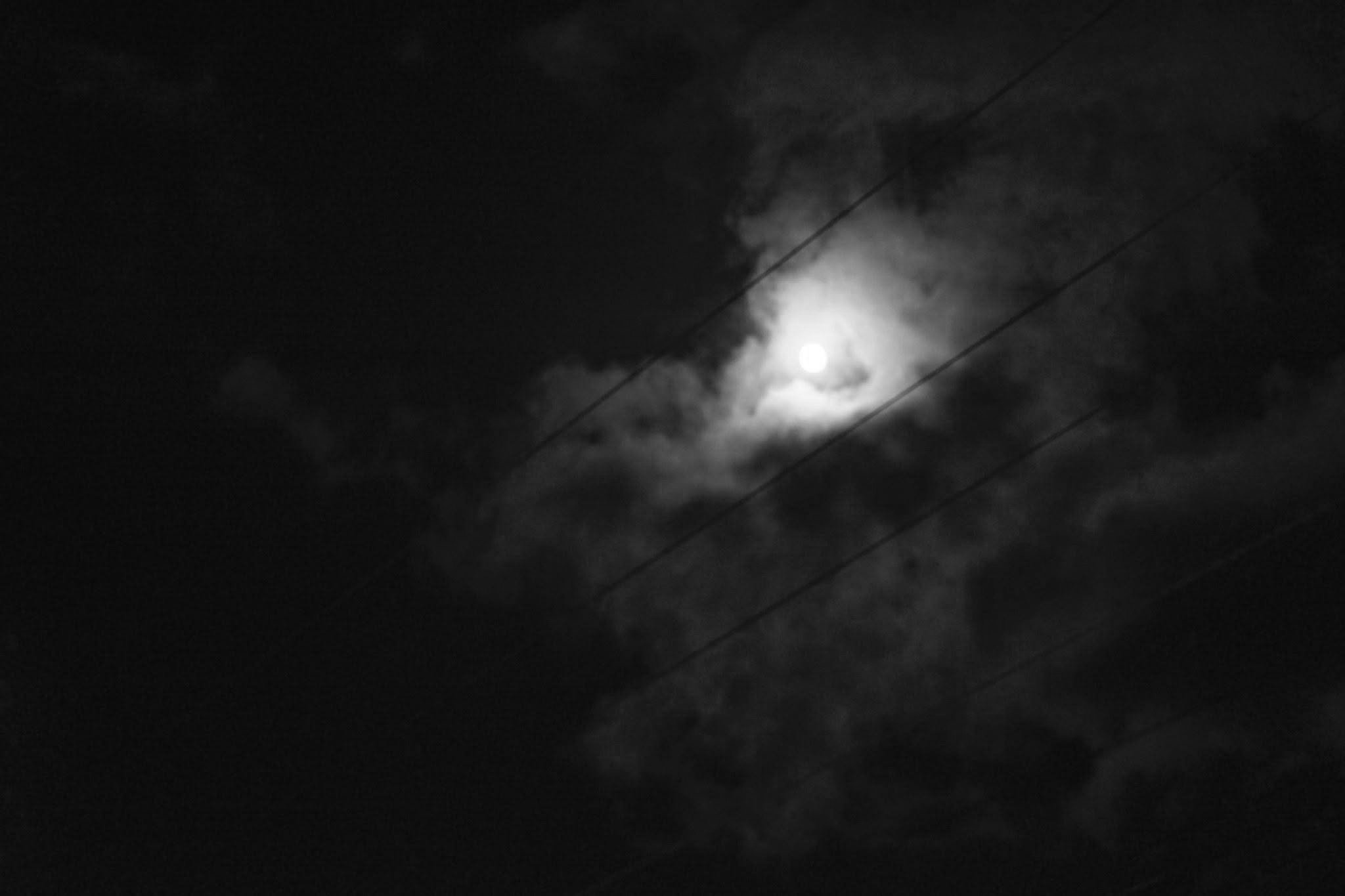
Prelude:
Moonlight Between Two Notes
Book I: Anatta & The Sound of Interbeing > Prelude
The world comes into the poem.
The poem comes into the world.
Reciprocity – it all comes down
To that. As with lovers:
When it's right you can't say
Who is kissing whom.
– Gregory Orr, The Book That Is the Body of the Beloved
A murmuration of starlings has no conductor.
Yet, in perfect concert, the birds rise and fall as one great exhalation of the evening: now trailing like silk on a breeze, now swelling into a dark, slow-turning storm. A shimmer travels through the flock as whole swathes turn sideways to the light, thinning almost to nothing before cascading into being again, each form dissolving into the next.
From the ground, this sight holds the imagination spellbound: a fugue written in flight, a nameless cathedral blooming and vanishing across the sky. A coherence no single bird could author ensouls the twilight air, present everywhere and located nowhere. For a moment, a Platonic mystery seems to stir behind the curtain of appearances, carrying the ancient suspicion that the world conceals something the world cannot say.
There are moments like this, when the world seems almost too full to hold.
A single unresolved note dies away in a quiet room, and the silence it leaves is charged with everything it might have become. Through moving cloud, stars appear and vanish, disclosing and withdrawing infinity by turns. Someone turns a corner after a farewell, and the empty street they leave behind is wide enough to hold the sky.
In each, the thing before us remains entirely itself, and yet seems to open onto more than itself, to intimate something that cannot quite enter the visible world.
Watching the birds, we feel the finite grow briefly translucent to the infinite. Form strains to the very margins of its being, reaching toward the formless, and sets us down on a threshold thin as a blade and without edges – between what the mind can grasp and the bare, aching fact that anything exists at all. The Japanese word yugen names something of this feeling: the mysterious depth of a reality never exhausted by what is shown. A visible scene gestures beyond itself, into the darkness that surrounds it and lends it its inexplicable beauty.
Perhaps what overflows the scene was never only out there. The sky’s inexhaustibility answers to our own: a mind that can be undone by a flock of birds has no floor either. Something in us opens, and we cannot find its edges.
Beauty, art, and love – these things do not deliver the moon to us. They arrange the finger so beautifully that, for a moment, we feel the moon’s presence as our own.
This is the sublime of emptiness.
A Blossom, Briefly
The rush comes first. Dry, like wind moving through autumn leaves, the sound swells from nowhere; a whisper, then a hiss, then a soft and endless breath too large to come from anything so small – and then there they are overhead, wingbeats passing in their thousands, flowing gracefully homeward to the reedbed where they will sleep. The old word arrives in the body before alighting on the mind: murmuration. A hush you feel in your chest.
As the senses settle, the eye begins to find its way in. That one sweeping form, so whole it seemed to breathe, resolves into countless small birds, each attending only to its immediate world: the drift and press of its nearest neighbours, the gap that opens, the tilt of a wing. Out of innumerable acts of exquisite local attunement, their collective body gathers, dilates, and buckles, darkening the sky and opening it again.
What looks from below like a single, sovereign pattern is born of relation alone. No bird holds an image of the whole. There is only leaning. This turns out to be another kind of mystery – no smaller, and no less ineffable – than the one we came for. Nearer, perhaps: hidden nowhere but in the spaces in between.
And the between is something that can be heard.
What starlings do in space, music does in the moving architecture of time. Nothing passes from one to the next but relation, and out of that passing, a greater coherence is born. Only now, we hear it from the inside.
Begin with a single note. When a hammer strikes middle C, with no note before it and no chord beneath, the sound is semantically inert. It has nothing to mean toward, and nothing to mean against.
But sound a D-flat major chord beneath it, and suddenly there is an interval. Something appears that belonged to neither note alone. The same note now hangs a semitone shy of arrival, straining upward toward something it cannot name. The heart knows it: we are close to home, but not yet there. This is the interval of longing.
Or – let a G7 gather first, coiled and expectant – and then fall into C.
Now, the same note arrives with a luminous relief, radiant and complete. The heart that reached comes to rest; the held breath lets go. Stretch that arc across forty-five minutes of symphonic wandering, and the final C transcends mere resolution into a bone-deep recognition – the homecoming of homecomings, a note that carries the weight of everything that kept us from it.
A moment ago our note was reaching; now it is where all reaching ends. It has acquired nothing, lost nothing. Only the space around it changed – and with it, the meaning of the note itself.
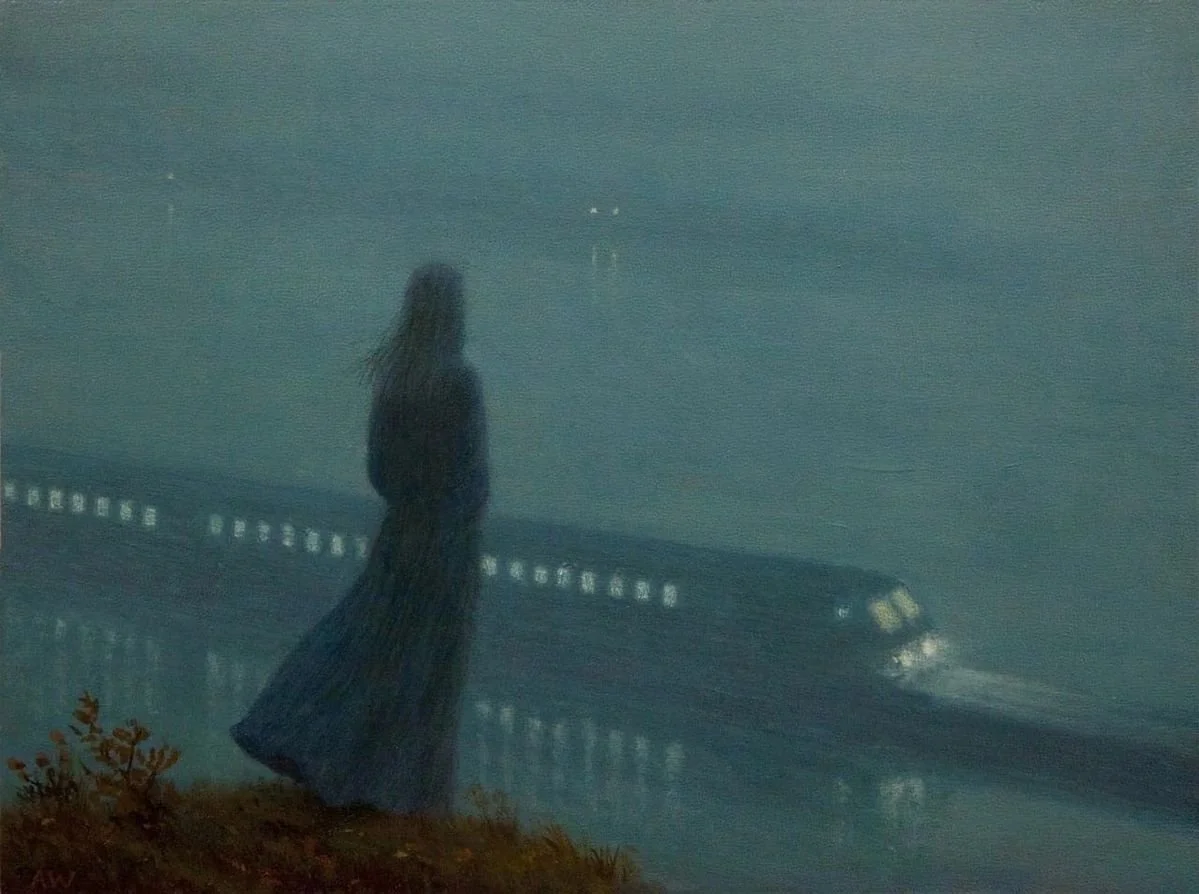
Lost Track, Aron Wiesenfeld, 2018
Follow this thread a little further, and it begins to unravel the familiar world.
A wavelength, alone, has no colour. Blue happens somewhere between light and an eye, a nervous system, a language, a sea someone once stood beside. And who am I, alone? Unseen, my face is an arrangement of features. Beheld, it lights with tenderness and threat, beauty and familiarity. Even the qualities I imagine most private were learned in a borrowed tongue, shaped by bodies and weather and years I did not choose. Another person can change not only what I feel, but what I become capable of feeling. I am less a finished self than a field of possible ones, waiting to be called forth – by love, by conflict, by memory, language, touch. Like a chord, or a whirlpool in a river, I have a recognisable shape, yet I cannot be lifted out of the movement that sustains me. I am a blossom, briefly articulated by the sunlight and soil of the world.
And so it goes. Meaning is simply the name we give to the charge that gathers between things, as lightning gathers between cloud and earth; it is what the distance does. The cathedral lives in no single starling, the longing in no single note. Both live in the interval, in the play of tension and release, in a pattern that keeps reshaping, as it unfolds, everything that came before.
Japanese aesthetics, which gave us yugen, has a word for this space: ma, the interval between things that lets each take its shape. In ma, the gap is not empty. It is charged and alive, a source of beauty. The silence between two strokes of a temple bell, still trembling with the first. The stillness before a Noh actor moves. The spacing of stepping stones which slows a walk into a meditation.
And the gap does more than tremble. It creates. When the bell is struck again, the second note gathers the first within it, and the silence between them – and something sounds that has never sounded before. Alfred North Whitehead saw every moment of the world made this way: “the many become one, and are increased by one.” Beauty itself lay in the richness of that gathering, in differences held together without being erased, their tensions still alive within the harmony. In his teleology, the whole universe leans across such gaps, reaching, moment by moment, toward the richest harmony it can find.
Perhaps you, too, are reaching. Felt from within, that small share of the universe’s leaning is what we call longing. No starling knows the shape it is making, yet by leaning toward its neighbours, it finds its place in the whole. So longing, too, can be followed: a felt pull toward a harmony larger than we can see. Our own sense of meaning appears less as an answer than as an orientation. To follow it without seeing the whole is what some have called faith.
In Sufi poetry, that harmony bears the name of the Beloved, or God, spoken of with the tenderness and desire of human love. And no one sang that longing more truly than Rumi. He knew that the distance we reach across is not a flaw in the music – it is the music itself. His reed flute sings only because it was cut from the reedbed, and its lament for the Beloved it came from is the most beautiful sound it can make.
“Since I was cut from the reedbed,
I have made this crying sound.
Anyone apart from someone he loves
understands what I say.
Anyone pulled from a source
longs to go back.
…’Hear the love fire tangled
in the reed notes, as bewilderment
melts into wine. The reed is a friend
to all who want the fabric torn
and drawn away. The reed is hurt
and salve combining. Intimacy
and longing for intimacy, one
song.
…
Days full of wanting,
let them go by without worrying
that they do. Stay where you are
inside such a pure, hollow note.”– Rumi, “The Reed Flute’s Song,” trans. Coleman Barks
The Hollow That Sings
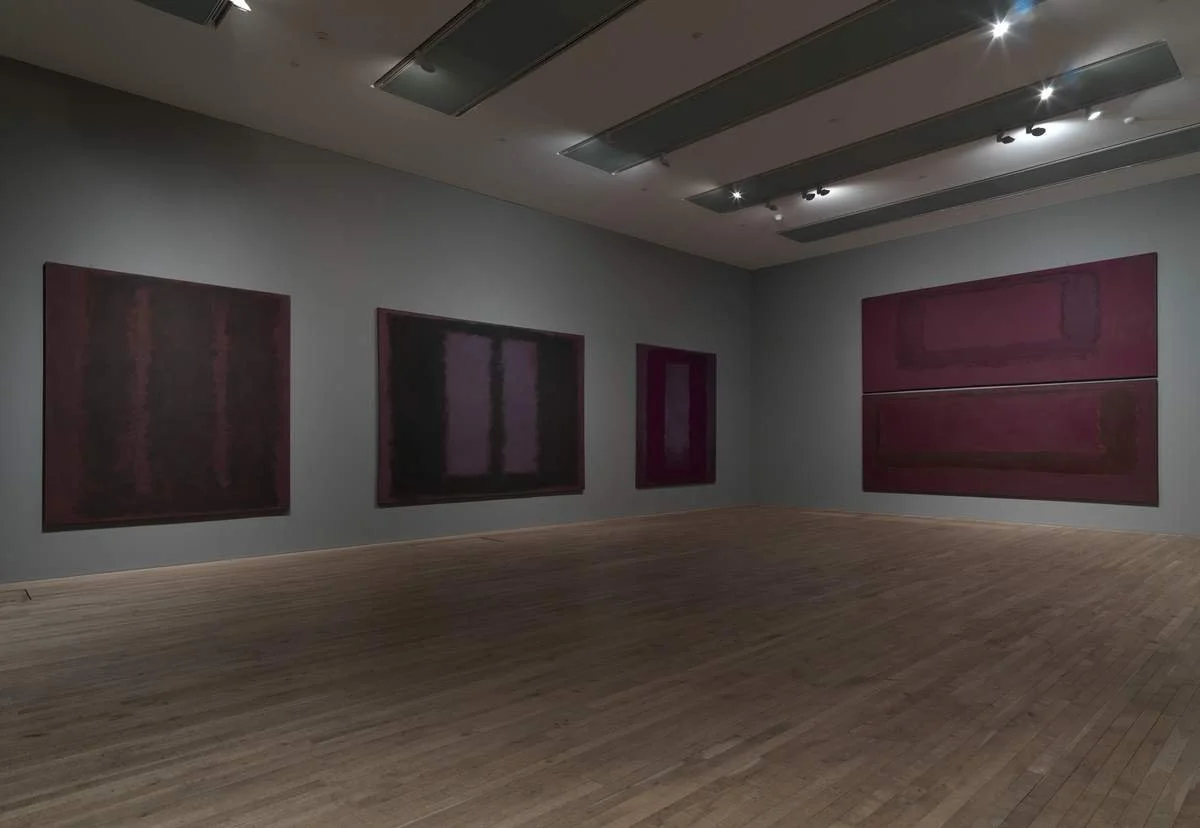
“The reed is hurt and salve combining.”
Deep inside Tate Modern, where Mark Rothko’s Seagram murals hang, there is a place where this can be felt.
The heaviness reached me before the paintings did. I had only just turned the corner into that room when, explicably and without warning, I began to weep. Many visitors do. It was as though I had chanced upon the vault where human pain has been kept all this time, unseen and forgotten – and found it still alive, still breathing. An ocean of it, held in so small a space. On each wall, the great maroon forms loom like monoliths, their reds throbbing at the edges like a bruise deepening beneath the skin; and the dark, unforgiving, closes over them slowly, the way cold stone seals a tomb. It is the paintings themselves that seem to ache.
They stand like presences, immense, unfathomable – almost gods. Before the largest of them, I felt a terror close to reverence, and found myself wanting to apologise to it, to cower before it. Still – it comforted me, as though it knew some place in me older and truer than words.
The longer I stayed, the stranger the paintings grew, and I along with them. Up close, the colours started to swell and fall with my own breathing. Somewhere in the staying, I realised, the fear had quietly turned. I felt myself loosen the way a held breath loosens. The terror of being so near to something so vast was still there, but it had grown a kind of tenderness. What had overwhelmed me began to seduce me, to draw me in; the room became a place I could not bear to part from. Something in it seemed to ask to be held – to be gathered, with me, into a coherence neither of us could reach alone. It hurt to remain, and it was harder to leave.
When I stepped out, the world lay flat and familiar, and I knew I had left the Beloved in one of its deepest forms.
***
What makes a reed an instrument is a wound. It has been cut, and then hollowed; without that emptiness, breath would pass over it and make no sound.
The Rothko murals, too, are hollowed. There is almost nothing in them – no figure, no horizon, no story – only a few fields of colour, their boundaries softening until no one can say where one ends and the next begins. It is as little form as can still be form.
Stripped this far, a painting should fall silent. Instead it opens. With nothing left to hold the eye, the colour presses outward and dissolves, and there we stand before something no longer made of paint, at once boundless and intimate. Here yugen returns: a beauty that deepens as the image withdraws. It is as though form, pared to its limit, were showing us – with its last breath – where it touches emptiness.
Rothko expected this. Those who weep before his pictures, he said, are having the same religious experience he had when he painted them. The religion he meant had no creed; it lay in the most fundamental human emotions of tragedy, ecstasy and doom. In that room, we grow quiet the way one grows quiet in prayer, turned toward something no image could ever contain. Like prayer, the room does not take our grief away. It gives it somewhere to move through. This is what art, at some of its deepest, can offer: a form in which sorrow can at last be borne. What was a stone in the chest becomes a passage.
This is possible only because suffering and beauty enter us through the same susceptibility: the tender fact that we are changed by what we cannot command. That opening widens wherever the world wears thin, and the thinnest places seem to exert the strongest gravity of all. Few are thinner than grief, which strips the world of its usual reasons and leads us to the brink where it stops explaining itself, where no answer comes. If we can stay there without closing, the hollow that wounds us becomes the very one through which beauty, in all its depth, can reach us.
For beauty, too, can undo us by giving more than we can hold. It finds us in the first sunlight touching a mountain summit while the valleys still lie in darkness; in the fine, papery skin over your mother’s knuckles; in a violin's long and trembling note, where the grain of the bow against the string becomes as moving as the melody itself. Sometimes the world catches us so unprepared that tenderness and astonishment become impossible to tell apart. We are moved by the sheer, improbable presence of things, how intimately they belong to one another and how briefly we are permitted to behold them in just this way. Here, beauty finally touches us in the place where no reason can follow; we can no longer feel our usual shores. Nothing has been answered. The world has simply come near enough to fill us with a love that asks for nothing.
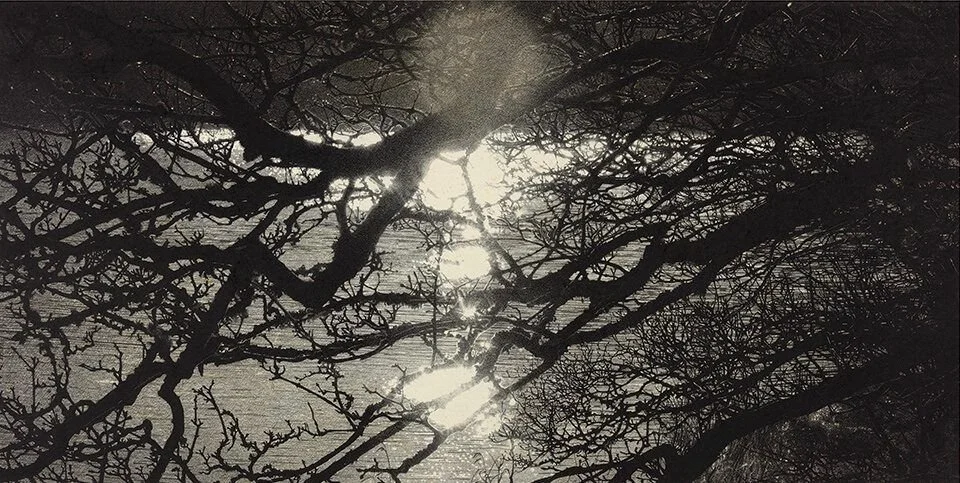
“The world is not comprehensible, but it is embraceable.”
– Martin Buber
Intimacy Without Possession
This strange intimacy with a world so present yet so ungraspable brings us near one of Buddhism's deepest insights: sunyata, emptiness.
The word misleads us if we hear it as absence. To be empty, in this sense, is to be empty of self-existence: nothing stands alone, of itself, as a sealed and finished essence. Everything takes its shape through what sustains it, what has brought it here, and the relations it enters.
You can hold this in your hand. Make a fist, then open it. The fist was real; it could grip, it could strike. Yet nowhere in the open palm can you find where it went, because it was never made of fist-stuff. It was a way of holding, real for exactly as long as the holding lasted.
We seldom notice this in the world. Most of the time, we let a thing’s name or purpose complete our beholding, and look no further. But now and then an encounter breaks that familiarity, catching us before we can recognise what we are seeing. In the Rothko room, we stood before nothing more than pigment and canvas; yet these words were utterly inadequate to what we met. What seemed settled grows strange again, slipping out from under its name and standing before us unaccountable – startling simply for being there at all. This is how existence stays miraculous: because nothing in it is ever finished, nothing can be fully named; our words, reaching after it, find the astonishment always just beyond them. The best art catches us like this, unguarded, and what remains is the world, blazing and unexplained. It seems to awaken before us, though perhaps it was never asleep; it is our own attention that has woken, and begun, at last, to meet it.
At its most searching, music lets us hear this with particular clarity. Every tradition has its vocabulary – the cadences we expect, the progressions we can hear coming before they sound – and much music lives happily within it, giving us the pleasure of what we already know. But the richest music asks more of that vocabulary. It holds our expectations in tension, now honouring them, now refusing them. Then, at certain moments, a harmony turns where we were sure it would not, and the floor of our listening gives way. Instead of breaking the music, the turn gathers it into something larger: unforeseeable, and yet, once heard, inevitable. We hear anew how much can pass through the notes that belongs to none alone. The music seems to open onto a new emotion altogether, at once strange and exact, too finely nuanced for any word we have. We find ourselves listening from somewhere we have never been, our capacity to be moved enlarged.
Why should music, of all the arts, undo us like this? Schopenhauer’s answer was that it depicts nothing: no object, no scene, nothing we can point to and name. There is no thing for our recognition to settle on, only relation unfolding in time, form thinned almost to air. Every note lives between what is yet to come and what has already passed, and we hear it through both. Anticipation and nostalgia meet there – the heart’s two ghost-states, each a presence woven almost entirely from absence – and in both, something touches us that we cannot bring wholly into the present. Part of our yearning may simply be to feel that passage happening, to behold existence before we have turned it into something settled. An intimacy without possession.
And so we find ourselves returning, again and again, to the places where form thins to translucence: to music and mourning, to love and the ache of nostalgia, to the stillness of meditation and prayer. What draws us there is a strange, almost erotic immediacy. The world is never nearer than when it eludes us, giving itself without ever giving itself away.
“Enlightenment is simply intimacy with all things … Not knowing is most intimate.”
– Zen Master Dogen
***
To say that something is empty, then, is not to say that it is unreal, or that it does not matter. It is to recognise how radically available it is to relationship. Like a held chord, each thing is wholly itself even as it goes on becoming: unfinished, and entire. Because the note has no final meaning, the next note can change what it meant – and the note after that. Because the self is never finished, each new encounter can transform us. Because the world is not fixed, something genuinely new can happen. Incompleteness, then, is no lack at all, but the very shape of the world's wholeness, the source of its freedom.
And that freedom is not only the world’s. Each of us is one of the places where the world becomes what it has never been. Whitehead’s richest harmonies are not waiting somewhere to be found; they are composed, moment by moment, from the tensions the world brings to bear on us. The hardest things in a life – its losses and its contradictions, what it cannot yet reconcile – need not be erased for that life to become beautiful. Held, even its deepest contrasts can become part of a richer harmony than any it could have reached without them. Our own incompleteness can begin to feel holy, and our longing like one of the ways existence continues to grow.
Sunyata, thus understood, is not a void; it is a fertile silence, free of all fixity. It is the hollow in the reed that lets breath become song, and song fall back into silence, and silence rise again as song. It is how life opens into death, and death into life; it is aliveness itself, and how anything sings at all.
Seen clearly, everything is such a sacred hollow: a place where something other than itself can arrive. To be moved is to feel ourselves opened in this way, changed where we stand by what is not us. And to be moved absolutely, beyond the shores of the self, is to find nothing in us that stands apart from what moves us.
This, perhaps, was the strangeness we met in that room. Nothing was explained, and nothing answered the grief. And yet the place where pain was kept turned out to be where it is being sung, and what is sung is no longer alone, but gathered into a harmony where inside and outside continually fold together. Through that hollow pass not only our longings but the whole trembling range of our susceptibility – ecstasy, grief, the terror of being so open to the world – and through it, too, the world reaches us, and something in us answers; we are in relationship. This may be what Rothko meant by the religious: the discovery that even the wound binds us to existence.
And herein lies the most tender turn in Rumi's love: the binding runs both ways. It is not only the lover who longs; in the Sufi telling, the Beloved delights in being known, and reaches toward us through every form it takes. So it was in that room. I had come to these paintings afraid, and found myself wanting to console them even as they consoled me, until I could no longer tell whose wound was being held. Then, hollowed like the reed, they let the grief pass between us like a single breath, and it became – without ever ceasing to be grief – something I could only call love.
The Ground of Being
Through all of this, someone has been quietly present: the one to whom the world has been giving itself, who is reading these words now.
All we have said of meaning rests upon that presence. A ratio of frequencies may be written down, pigment laid upon canvas, yet neither becomes music, grief, or love until it is received. Charged is the word we reach for when a relation ceases to be merely structural and begins to be felt. A charged silence, a charged glance, a charged room.
Who, then, hears the intimacy of a chord? Who sees the blue of the sky?
Here consciousness enters. If the world is the music, consciousness is the silence of the hall in which it is heard.
Alan Watts returned again and again to images of this kind. The eye sees everything except itself. The ear hears sounds, but never hears hearing; it has no sound of its own, which is precisely why sound can appear in it at all.
Try it now. Look for the one who is reading these words. You will find the words, the light on the page, perhaps the soft rise of your own breath – but the one looking is nowhere among them. It is the place the looking comes from, and you cannot turn around far enough to see it. Watts said this of the Godhead itself: it is never an object of its own knowledge, but always “an endless mystery to itself.”
This is what the apophatic mystics, who refused God every name, were pointing toward: an attributeless openness, the patient capacity in which all coming and going becomes possible. The Upanishads take one vertiginous step further: Tat tvam asi, you are that. What looks out through your eyes is this very same self-concealing openness: colourless, yet the place where colour happens; soundless, yet the place where sound happens.
In this concealment lies the world's own artistry: it keeps the world a book we can never finish reading. And what a gift that is – a joy that has no end. For the works of art we love most keep something back, living on in what they only suggest. There is nothing hidden, except where mystery is preferred. So, too, with the one who sees: forever unknown to itself, it is the most inexhaustible work of all, the mystery most worth living in – and we are already inside it.
For a moment, this yields a beautiful cosmology. Consciousness is not something the universe produced late, by accident, in a few warm skulls. It is what the universe is made of – the one ground Vedanta calls Brahman, appearing as everything that appears. The stars, the flock, the one who disappears around the corner: all of it is that single awareness at play, hiding from itself in every form the way a child hides – only so that it can be found.
“God is what mind becomes when it has passed beyond the scale of our comprehension.”
– physicist Freeman Dyson
Not One, Not Two
Here an old temptation returns. Having found an openness at the heart of things, we begin to picture consciousness as hidden somewhere beyond appearance: the real thing behind the scenes, the machinery beneath the painted set, a truer world than this one. Plato is waiting at the edge of this thought.
But can there be a seeing with nothing seen, a hearing with nothing heard, a lover with no one to love? Even darkness is seen; even silence is heard. Look again at the ground we have just found, and it no longer stands alone: the seer needs the seen as surely as the seen needs the seer.
Follow this a little further. The ear is in the world, its curl of cartilage and coil of fluid tuned over millions of years by air and weather, by predators and song. And yet the world is in the ear: the only thunder I will ever know arrives inside it. The head sits in the world, the world sits in the head, and in that world sits a head, holding a world. The mind, trying to follow, tumbles into a paradox, a hall of mirrors with no last mirror.
The early Buddhist texts lead us out of the hall with a gentle image. Two sheaves of reeds stand upright only by leaning on one another; take one away, and the other falls. In the sutta, the sheaves are consciousness and the world it knows; they are dependently arising. Neither stands beneath the other as its ground; each holds the other up. Consciousness, too, leans.
Now, this would seem to undercut the idea of consciousness as the foundational space, the ear that exists prior to sound.
But perhaps our paradox was only the last trace of an old habit. It appears only while we are still thinking in terms of things – even very subtle things, like consciousness and world as two entities in relation – and as soon as we posit two reeds, we must ask which came first, which is more fundamental, which is the ground.
The nondual move is to say – there are no reeds. There is only leaning.
Not consciousness and world arising together. Not even consciousness as world. Just – this. The arising itself, without a subject who arises and an object that is arisen into.
Nor does their intimacy collapse into one undifferentiated substance; the One would only be another reed. To call a chord one is to lose the notes; to call it many is to lose the music. Neither separation nor unity can be made into a final resting place. When thought reaches at last for emptiness itself, that, too, slips through its hand. Even awakening can become another concept to cling to, another way of imagining a separate self where none can finally be found.
Nagarjuna's tradition gives this refusal a shape: not one, not many; not both, not neither. It’s not trying to land on a position. It is the deliberate exhaustion of every last one, the way a koan exhausts the mind, so that something else becomes visible in the silence after.
And that silence is not a vacuum. It hums. If existence has a fundamental vibration, perhaps it is this: the trembling of a world that will not come to rest in any concept we offer it.
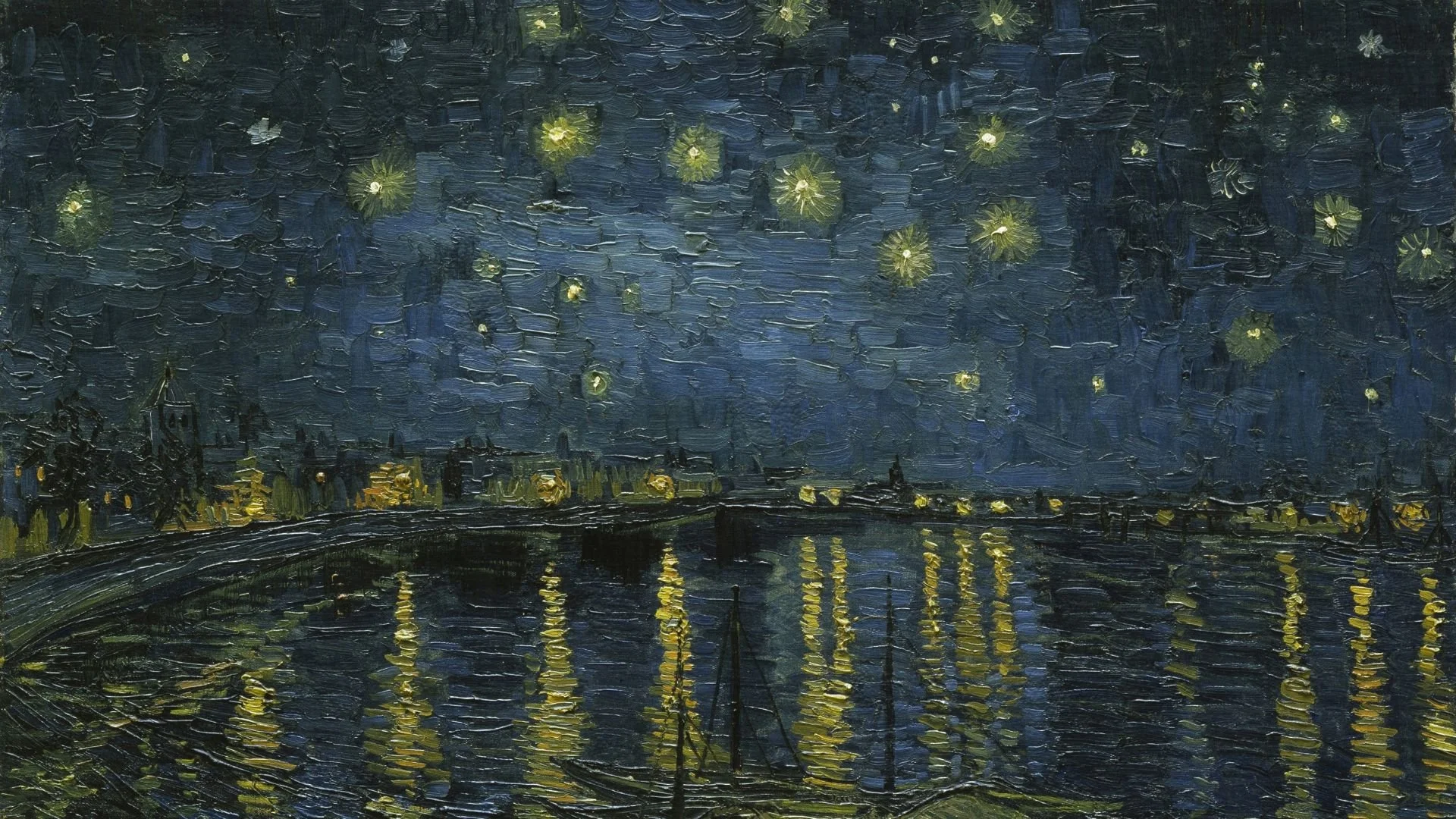
Starry Night Over the Rhône, Vincent van Gogh, 1888
Between the world we wander in and its liberation, Nagarjuna wrote, there is not the slightest difference – what changes is only the seeing. Open the hand once more: the palm is no truer than the fist, but only another way of holding. Liberation is not trading the fist for the palm, form for formlessness. It is seeing that neither was ever hiding anything.
The Heart Sutra folds all of this into a single line: form is emptiness, emptiness is form. Its first half opens the hand. Look closely enough, and the murmuration comes apart into birds, the birds into leaning, the leaning into everything it depends on. Its second half fills the hand again with the whole world, and gives it nothing to grasp: look for emptiness itself, and there is nowhere to find it apart from the things whose emptiness it is.
And so the question the starlings raised is answered by this very world, met in its fathomless suchness before explanation closes around it. “To see,” Paul Valéry wrote, “is to forget the name of the thing one sees.” At the limits of explanation, the need for a final meaning falls away, and after all this we arrive exactly where we began: the turning of the birds, a chord left hanging, the changing light of a human face. There was never anywhere else to go.
Moonlight Between Two Notes
This is what the music was always showing us. We said the note means nothing on its own; then that meaning lives in the interval; then that the interval needs a listener to become charged. But note, interval, listener and charge were never four things in sequence. They are aspects of a single gesture, distinct yet inseparable, which we can tell apart only when we slow it down and hold it still.
When you’re actually inside music – really inside it – there’s no listener and no sound. There’s just listening. What we called the listener is simply a place where that listening gathers to a point, the way a wave is where the ocean, for a moment, rises. You are not someone in the hall, waiting to understand. You are the interval; you are the emptiness that sings.
Someone still vanishes around the corner; we still have to leave that room, and still it hurts. And – no one ever left. The Beloved goes on, meeting us in the world’s myriad forms, for the same emptiness that wounds us is the openness in which love goes on creating ways of meeting that have never existed before. No meeting need be love’s last. This is intimacy without possession at its fullest: the continual unfolding of relationship itself, in a world that is a boundless invitation to love.
We take longing to be the measure of distance: the ache of how far we are from a Beloved waiting somewhere at its far end. But there is no far end. What we have called longing is the Beloved singing its own becoming, and singing it through us. The hand closes and opens, closes and opens, like breath. There is no last note to arrive at, nothing at last to hold, and what might seem a lack is the world's infinite freedom. Like the richest music, it can always turn where we were sure it would not, into something unforeseeable, and yet, once heard, inevitable.
We came to beauty, art and love hoping they would point us to the moon. But look again: the finger, too, is moonlight. So was the grief in that room. Even the distance shines – and so do we, reaching across it.
***
The birds turn again. Their cathedral folds and opens, its coherence renewed in the answering of each life to the lives around it. Beneath them, we too are drawn into the movement: the sky changing what we feel, what we feel changing how we see.
None of it had to be. Not the birds, not the bruised gold of the evening, not the face upturned beneath them. Still it comes, unbidden, again and again, born anew in every moment: the universe unfurling at its edges, in the form of us, leaning in.
And this time we recognise what we are looking at. The world’s fullness, too great to hold, is emptiness made palpable: open all the way down, luminous and strange. The depth without a floor, the boundlessness that undid us – it is our own face, seen as if for the first time.
Heard closely enough, the reed’s weeping was always song. The reed and the reedbed it was cut from are the same movement, briefly separated so that longing becomes possible, so that meaning becomes possible, so that the universe can feel the distance between two notes and call it beautiful.
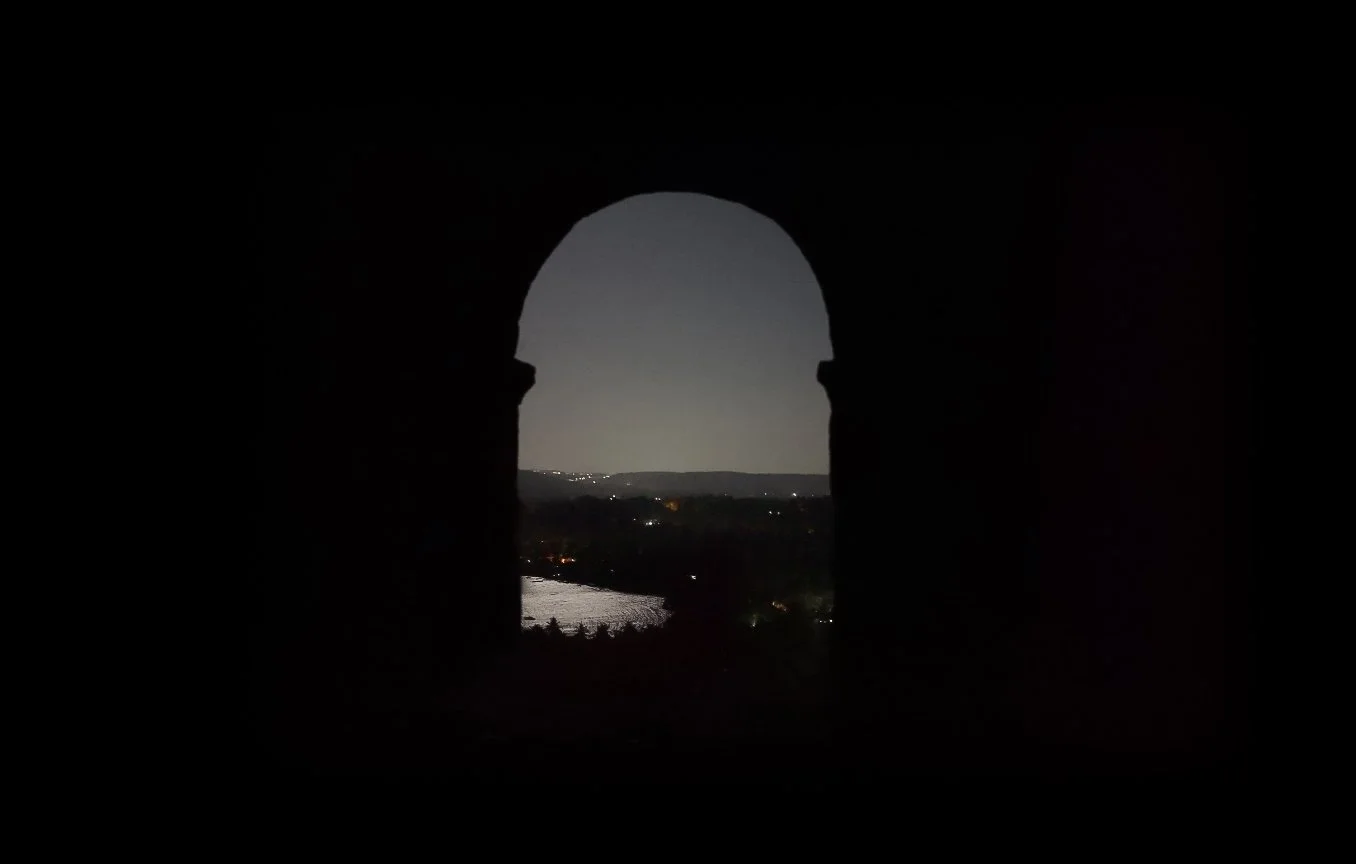
Lila, Clara Doan, India 2017